
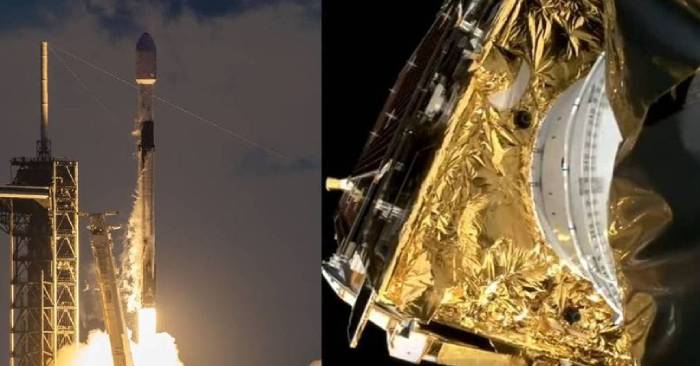
SpaceX, led by Elon Musk, successfully launched ISRO’s GSAT-N2 communication satellite into orbit from Florida’s Canaveral Space Force Station on Tuesday. This marked the first-ever collaboration between the Indian Space Research Organisation (ISRO) and SpaceX, showcasing a significant milestone in commercial partnerships for space exploration.
About GSAT-N2
GSAT-N2, also known as GSAT-20, is a Ka-band high-throughput satellite developed by NewSpace India Limited (NSIL), the commercial arm of ISRO. Designed to enhance connectivity, it features 32 user beams—8 narrow spot beams for the Northeast and 24 wide spot beams for the rest of India. Its payload supports a data throughput of 48 Gbps, making it India’s highest throughput satellite. With a mission life of 14 years, GSAT-N2 will play a pivotal role in bridging the gap in in-flight internet services across the Indian region, addressing a long-standing connectivity void.


Why SpaceX?
Given GSAT-N2’s weight of 4,700 kg—beyond the payload capacity of ISRO’s Mark-3 launch vehicle, which supports up to 4,000 kg in geostationary transfer orbit—SpaceX’s Falcon 9 was chosen for this mission.
Dr. M Sankaran, Director of the UR Rao Satellite Centre, emphasized the satellite’s transformative impact, stating, “This homegrown satellite will revolutionize in-flight internet connectivity over India and solidify its position on the global internet map.”
This collaboration signifies a leap forward for India’s space technology and connectivity ambitions, underlining the potential of international partnerships in space exploration.