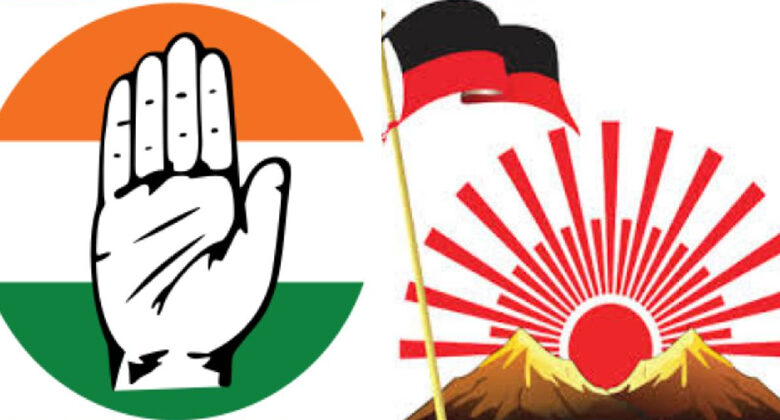
Visible differences within the alliance between M K Stalin’s DMK and the Indian National Congress in Tamil Nadu are raising concerns about its stability and long-term prospects. Public disagreements, uneven coordination and inconsistent messaging have contributed to a growing perception that the partnership is under strain rather than functioning with a unified political vision.
A major point of concern is the lack of a shared strategy. The two parties have released separate manifestos, with little indication of coordinated planning or policy alignment. This has led observers to question how effectively the alliance could function if it were to govern.


Seat-sharing talks further exposed tensions, with prolonged negotiations and signals that Congress may not secure cabinet representation reinforcing perceptions of an unequal partnership. Differences have also surfaced in how the alliance presents itself publicly. While Rahul Gandhi has referred to it as part of the INDIA bloc, Stalin has used a different formulation, reflecting a lack of consensus even in messaging.
Leadership optics have added to the narrative of distance. Gandhi and Stalin have seldom appeared together in recent public events. In one recent speech, Gandhi mentioned Mamata Banerjee but did not refer to Stalin, an omission that drew attention in political circles.
Strains are visible beyond the top leadership as well. Congress leaders have voiced concerns about governance and organisational issues, while DMK members have questioned Congress’s grassroots strength. Criticism from within the wider alliance has further underscored these tensions. Premalatha Vijayakanth of the Desiya Murpokku Dravida Kazhagam publicly raised concerns about crime and social issues in the state, remarks seen as reflecting unease within sections of the alliance.
In contrast, the National Democratic Alliance has sought to project a more unified image under Narendra Modi. In Tamil Nadu, leaders such as Edappadi K Palaniswami, K Annamalai, Anbumani Ramadoss, T. T. V. Dhinakaran and G K Vasan have appeared more aligned in their messaging and positioning.
This contrast is becoming a defining feature of Tamil Nadu’s political landscape. While one alliance appears to be managing internal differences, the other is emphasising coordination and unity. As voters weigh these competing narratives, the ability of each bloc to maintain cohesion and present a credible, unified front could play a key role in shaping electoral outcomes in the state.