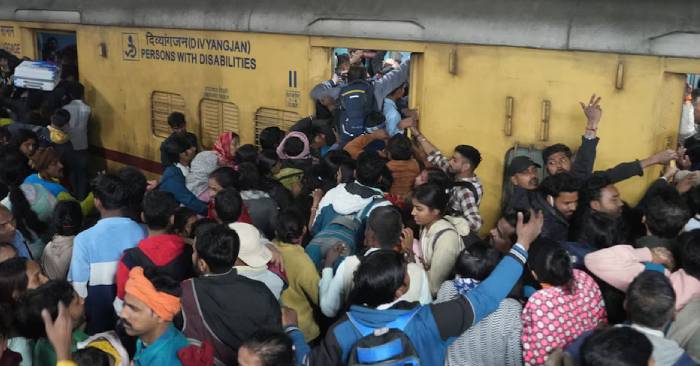
The Railway Protection Force (RPF) has submitted its preliminary investigation report to the Railway Ministry regarding the tragic incident at the New Delhi railway station on Saturday night. The report confirms that the death toll has risen to 20, contradicting earlier estimates of 18 fatalities, with an additional 10 people seriously injured.
According to the report, the confusing train announcements played a crucial role in triggering chaos among passengers, ultimately leading to the deadly stampede. The investigation further revealed several railway safety lapses, raising serious concerns about crowd management at one of India’s busiest railway stations.


Key Findings from the RPF Report
-
Confusing Train Announcements Led to Panic
- The special train to Prayagraj was initially announced to depart from Platform 12, prompting a large group of devotees to rush towards it.
- Shortly after, a second announcement clarified that the train would actually depart from Platform 16.
- This contradictory information created mass confusion, resulting in uncontrollable overcrowding as people scrambled between platforms.
-
Unrestricted Sale of General Tickets
- Despite the already heavy rush, railway authorities continued to sell general tickets without any limit, worsening congestion on the platforms and footbridge.
-
Additional Crowds from Other Trains
- The situation escalated further as passengers of Magadh Express and Samparka Kranti Express—stationed at Platforms 14 and 15—also contributed to the surge in crowds.
-
Evacuation Challenges and Delayed Response
- Rescue operations were hampered by the sheer density of the crowd.
- Authorities had to close entry gates and prevent more passengers from entering to clear the area for emergency response teams.
-
Non-Functional CCTV Cameras Hindered Investigation
- The CCTV cameras installed on the flyover where the incident occurred were not working, leading to critical footage being unavailable for the investigation.
Railway Safety Measures Under Scrutiny
The RPF report has highlighted the urgent need for better crowd management and safety protocols at railway stations. Experts have called for strict monitoring of passenger movement, functional surveillance systems, and accurate train announcements to prevent similar tragedies in the future.
This shocking lapse in railway operations raises serious questions about passenger safety and the efficiency of Indian Railways in managing large crowds. The Railway Ministry is expected to take corrective measures to address these failures and implement better crowd control mechanisms going forward.