In the serene hill regions of Kerala, Maundy Thursday—or Pesaha—is marked not only by solemnity and prayer but also by a unique culinary ritual: the making of chutta pesaha appam. While steamed kurisappam is more common in lowland areas, many Syrian Christian families in places like Kothamangalam, Perumbavoor, and parts of Thrissur continue to preserve this beautiful, fire-roasted version of the Maundy Thursday bread.
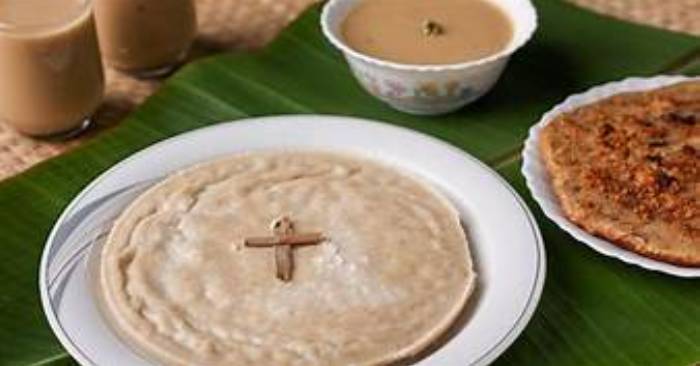
Maundy Thursday, which commemorates the Last Supper of Jesus Christ, holds deep emotional and spiritual meaning during Holy Week. The act of preparing pesaha appam is more than tradition—it is a tribute to ancestral wisdom and shared faith. On this day, households fall into a sacred silence. In the kitchen, over the warm glow of an earthen stove, an uruli (heavy bronze cauldron) is gently heated. A thick, spiced batter is poured in and flattened, marked with a cross using palm leaves. Another pot filled with hot embers is placed on top, allowing the appam to bake from both sides, creating a smoky, toasted texture that speaks of heritage and devotion.


As evening approaches, the family gathers. The appam is not sliced but reverently broken after prayer. Along with a sip of sweet pesaha paal (a coconut-jaggery drink), each person receives a piece—sharing in a quiet, powerful moment of unity.
This is not just food—it’s memory made edible. A dish prepared once a year, carrying the weight of faith, love, and generational bonding through the simplest elements: rice, coconut, fire, and silence.