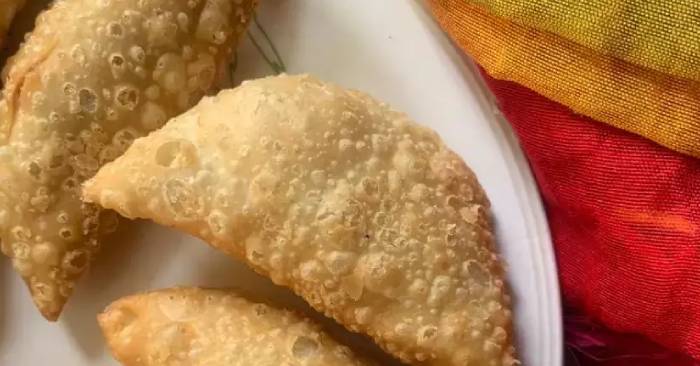
Maharashtrian Karanji, a delicious sweet pastry filled with coconut, jaggery, and an array of spices, is a beloved festive delicacy, particularly during Diwali, the Festival of Lights. In North India, this treat is referred to as Gujiya, symbolizing abundance, joy, and the spirit of sharing. Traditionally, Karanji is made and enjoyed with family and friends, making it a must-have during the celebrations.
Karanji, also known as Karjikai, is a crescent-shaped pastry with a crispy outer layer crafted from all-purpose flour, encasing a delightful sweet filling. This festive favorite is cherished by both adults and children alike. At its essence, Karanji consists of a thin covering of all-purpose flour filled with a sweet mixture of roasted desiccated coconut, nuts, raisins, sesame seeds, and sugar. While the preparation may appear complex, the rewarding blend of crunchy pastry and sweet filling is truly worth the effort.


Though most commonly known as Karanji in Maharashtra, various versions of this treat exist across India, including Ghughra in Gujarat, Pedakiya in Bihar, and Somas in Tamil Nadu. The differences between Karanji and Gujiya mainly lie in their fillings; while Karanji typically contains coconut, poppy seeds, and nuts, Gujiya often includes khoya or mawa (dried milk solid) alongside nuts and dry fruits.
Historically, the origins of Karanji can be traced back to ancient India, with references found in Sanskrit texts discussing a similar sweet called ‘Karanika.’ Artifacts from the Mauryan period depict sweets that closely resemble Karanji, while Mughal influence during the 16th to 18th centuries introduced khoya in some versions.
During Diwali, Karanji serves a significant purpose beyond being a mere treat; it embodies joy and unity as families gather to prepare and share them in large quantities. This delectable pastry is not just a culinary delight but a symbol of cultural heritage, representing prosperity and celebration during the festive season.
For those eager to enjoy this delicacy, here’s a simple recipe to make your own Karanji at home, ensuring that you can partake in this sweet tradition this Diwali.