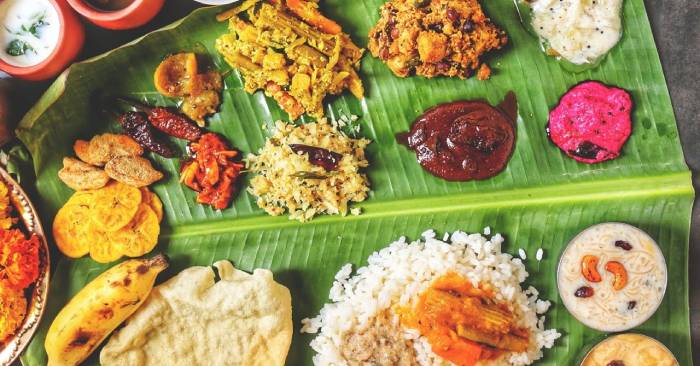
The Kerala sadya, a grand vegetarian feast served on banana leaves, is a cherished part of Malayali culture. While it is often celebrated as a balanced meal, experts are now questioning its nutritional value in the context of modern dietary needs.
Dr. TS Anish, a professor at Kozhikode Medical College, highlights that the sadya, with its large portions of white rice, multiple sweet dishes, and fried items like banana chips and pappadam, is calorie-dense and low in protein. A single sadya can provide 70–80% of an individual’s daily calorie requirement, often leading to drowsiness due to excessive carbohydrate intake.


Dr. Mumtaz Khalid Ismail, a clinical dietitian, notes that a full sadya contains around 1,880 kilocalories, equivalent to a day’s recommended intake. The meal’s high saturated fat content, primarily from ghee and coconut-based dishes, further raises concerns. While it offers fibre, the high glycaemic index of white rice can cause blood sugar spikes.
Nutritional gaps are another issue, particularly for vegetarians, as the sadya lacks essential micronutrients like vitamin B12, found only in animal-based foods. However, elements like buttermilk provide probiotic benefits and are rich in calcium and protein.
To make the sadya healthier, experts suggest replacing white rice with parboiled rice or millets, increasing protein-rich dishes like sprouted legumes, and reducing fried and sugary items. These adjustments can help retain the meal’s traditional essence while making it more balanced and nutritious.