Spring onions and onion flower stalks, though both from the onion family, have distinct characteristics and serve different culinary purposes. While spring onions are a staple in kitchens year-round, onion flower stalks (known as “peyajkoli” in Bengali) are a seasonal delicacy primarily enjoyed in winter. Understanding their differences in appearance, flavor, texture, and culinary use can help you choose the right one for your dishes.
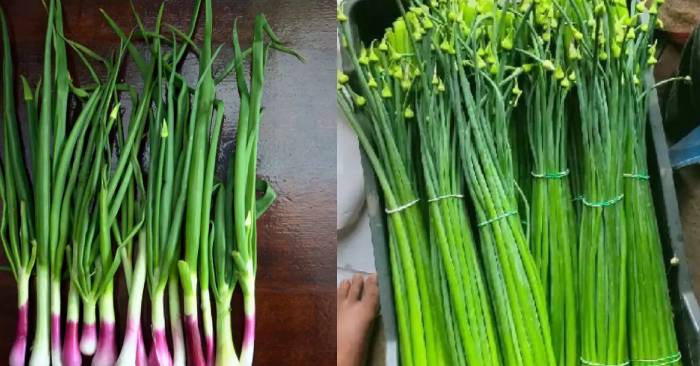
Spring onions, often referred to as green onions, are young onions harvested before the bulb matures. They feature long, slender green leaves and a small, undeveloped bulb. Their mild onion flavor and crunchy texture make them perfect for raw dishes like salads and sandwiches, as well as for adding a fresh note to stir-fries, soups, and marinades. Spring onions are a versatile ingredient that can be used year-round in various cuisines, especially in Asian dishes.


In contrast, onion flower stalks are the flowering stems of onions, harvested during winter, often with unopened flower buds still attached. They are thicker and firmer than spring onions, and when cooked, they soften and develop a mild sweetness. Their flavor is more pronounced, and they are typically stir-fried or paired with ingredients like potatoes, cauliflower, or fish in Bengali cuisine. Dishes like Peyajkoli Posto, Alu Peyajkoli Bhaja, and Alu Phulkopi Diye Peyajkolir Torkari showcase the unique, comforting flavors of onion flower stalks.
In summary, spring onions are best suited for fresh, raw applications, while onion flower stalks are ideal for hearty, cooked dishes. Whether you’re adding a crunch to your salad or preparing a warming winter dish, both ingredients offer distinct flavors and textures to enhance your meals.