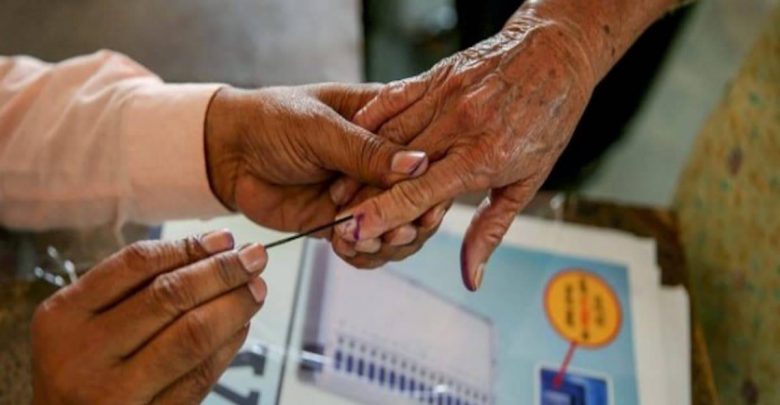
The much-anticipated Delhi Assembly elections have begun today, with polling taking place across all 70 constituencies. Voting started at 7 AM and will continue until 6 PM, with over 1.56 crore voters expected to cast their ballots across 13,766 polling stations. The outcome of this crucial election will determine the political future of 699 candidates and could significantly alter the governance landscape of the national capital.
AAP Seeks Third Term, BJP Looks to Reclaim Delhi
The Aam Aadmi Party (AAP), led by former Chief Minister Arvind Kejriwal, is vying for a third consecutive term, emphasizing its achievements in governance and welfare schemes. Meanwhile, the Bharatiya Janata Party (BJP) is making an aggressive push to regain control of Delhi after a 25-year-long hiatus, focusing on issues such as corruption allegations against AAP and law and order concerns. The Congress, once a dominant force in Delhi politics, is aiming for a revival after drawing a blank in the last two elections.


Heavy Security and Polling Arrangements
To ensure smooth and secure polling, the Election Commission has deployed:
- 220 paramilitary companies
- 35,626 Delhi Police personnel
- 19,000 home guards
Additionally, nearly 3,000 polling booths have been classified as sensitive. Special security provisions, including drone surveillance and Quick Reaction Teams (QRTs), have been arranged to maintain law and order.
For enhanced voter convenience, the Election Commission has introduced a Queue Management System (QMS) app, allowing voters to check real-time crowd levels at polling stations. Additionally, 6,980 out of 7,553 eligible voters under the home voting facility have already cast their ballots.
Campaign Highlights and Key Issues
The election campaign, which officially ended at 6 PM on Monday, was marked by intense competition among the three major parties.
AAP: Focused on its governance record, with leaders like Arvind Kejriwal and Atishi leading rallies across Delhi. Key promises included free bus rides for students, insurance for auto and taxi drivers, and ₹18,000 financial aid for temple priests and gurdwara granthis.
BJP: Led by Prime Minister Narendra Modi, Home Minister Amit Shah, and party president JP Nadda, the party aggressively attacked AAP over corruption and law and order failures. Its manifesto included ₹21,000 financial assistance for pregnant women and subsidized LPG cylinders at ₹500.
Congress: With Rahul Gandhi and Priyanka Gandhi at the forefront, Congress positioned itself as an alternative to both AAP and BJP, promising ₹8,500 monthly unemployment benefits.
The campaign also saw intense verbal exchanges, AI-generated spoofs, and debates over major issues like the “Sheesh Mahal” controversy, Yamuna’s water quality, and allegations of voter list tampering.
What’s Next?
With voter turnout expected to play a decisive role, the results on February 8 will determine whether AAP retains power, BJP ends its losing streak, or Congress makes an unexpected comeback. As polling continues, all eyes are on Delhi’s electorate, whose decision will shape the city’s political future.