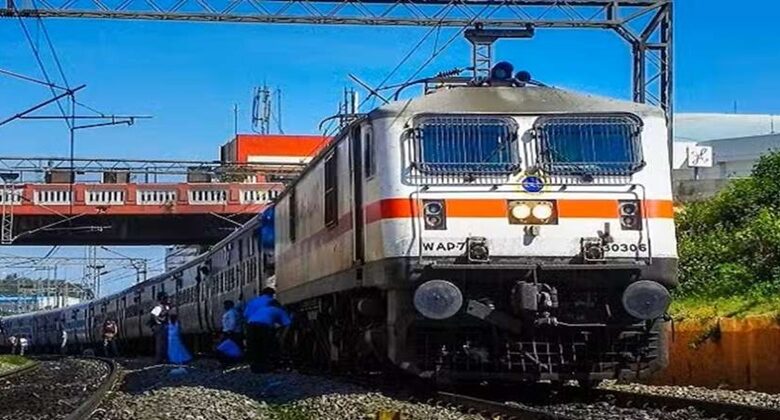
Indian Railways, for the first time, has permitted the movement of empty passenger train rakes on the Dedicated Freight Corridor (DFC) network – a rail system originally designed exclusively for freight operations. This decision marks a significant operational shift, enabling the railways to optimise available infrastructure during the ongoing festive season.
Explaining the reason for this operational change, the official added that the permission was granted to help manage the surge in passenger traffic during the festive period. “Passenger and express trains can be run in large numbers,” the official said, emphasising that the move would ensure smoother transportation for those travelling home for Chhath Puja, which will be celebrated between October 25 and October 28 this year.


The Dedicated Freight Corridor Corporation of India Limited (DFCCIL), a special purpose vehicle under the Ministry of Railways, is developing a network of high-capacity rail corridors exclusively meant for goods trains. The aim is to decongest the existing Indian Railways network, reduce travel time for freight movement, and improve the overall logistics efficiency across the country.
Currently, two major freight corridors are under construction and partial operation: Eastern Dedicated Freight Corridor (EDFC): Stretching 1,337 km from Ludhiana (Punjab) to Sonnagar (Bihar), this corridor primarily handles coal, steel, and agricultural freight.
Western Dedicated Freight Corridor (WDFC): Covering 1,506 km, it runs from Jawaharlal Nehru Port Terminal (JNPT) in Maharashtra to Dadri in Uttar Pradesh, connecting the country’s industrial and export hubs. Beyond the existing two, the Railways Ministry has also initiated Detailed Project Reports (DPRs) for three new freight corridors: the East-West Corridor, which spans from Palghar to Bhusawal, Nagpur, Kharagpur, and Dankuni, including the Rajkharsawan-Kalipahari-Andal sections. North-South Sub-Corridor: Vijayawada-Nagpur-Itarsi.
Allowing empty passenger train rakes to run on the DFC network will help free up the mainline tracks for operational passenger services, improving train punctuality and capacity utilisation. It also reflects the Indian Railways’ increasing flexibility in utilising its new infrastructure to meet evolving transportation demands.