As Dravida Munnetra Kazhagam (DMK) heads into a crucial election cycle in Tamil Nadu, the state’s political landscape appears to be undergoing a subtle but closely watched shift. While the party continues to frame the upcoming polls around welfare delivery and governance, a parallel narrative is gaining ground—one that points to a carefully managed leadership transition within its ranks.
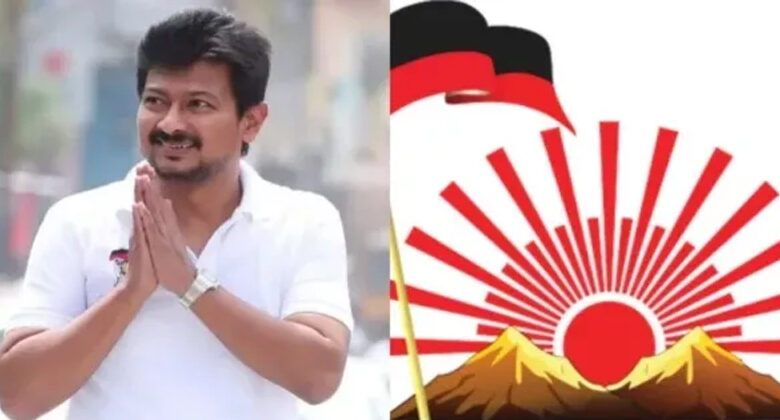
At the centre of this discussion is Udhayanidhi Stalin, whose rapid rise has become a focal point of both interest and debate. From once expressing reluctance to enter politics, he has progressed quickly through key roles—serving as Youth Wing Secretary, MLA, Minister, and now Deputy Chief Minister. Supporters view this trajectory as a natural outcome of his expanding responsibilities, while critics argue it appears structured and strategically guided rather than entirely organic.


This perception has been amplified by strong public endorsements from senior party leaders, many of whom have openly projected him as a future Chief Minister. Such statements have added weight to the idea that succession planning within the DMK is not merely speculative but increasingly deliberate.
Even as Chief Minister M. K. Stalin remains the primary face of governance and the election campaign, observers note a growing concentration of organisational and administrative focus around Udhayanidhi. His involvement in high-level review meetings, as well as district-level programme monitoring, has drawn attention to his expanding influence within both the party and the government.
Critics describe this as the emergence of a “dual leadership” dynamic, where visibility in decision-making appears to tilt toward a relatively new leader. They argue that such a shift could sideline experienced ministers and create ambiguity in governance structures.
At a broader level, the debate touches on ideological questions. The DMK has long championed the “Dravidian Model,” rooted in social justice, inclusivity, and merit-based advancement. However, the perceived consolidation of influence within a single family has led some observers to question whether these ideals are being tested by the realities of political succession.
For voters, the issue goes beyond individual leadership and speaks to the nature of governance itself. Should leadership be driven primarily by experience and institutional depth, or is continuity within a political family an acceptable evolution? In a state with a population exceeding eight crore, critics argue that leadership choices should reflect a broader democratic base rather than a concentrated centre of power.
Political analysts note that Tamil Nadu’s history has largely favoured ideology- and policy-driven politics over personality-centric narratives. Yet, the current discourse suggests a shift, with succession politics emerging as a key theme in the electoral conversation.
As the state approaches polling, the election is likely to represent more than a contest between parties. It may ultimately serve as a reflection of public sentiment on leadership, governance, and the balance between continuity and change—potentially shaping not just the next government, but the future trajectory of political power in Tamil Nadu.