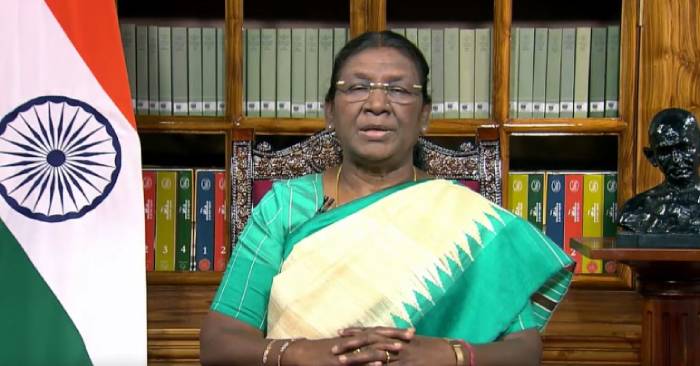
New Delhi: President Droupadi Murmu has approved the establishment of the 23rd Law Commission of India, which will operate from September 1, 2024, to August 31, 2027. The recently issued notification confirmed that the commission will consist of a full-time Chairperson, four members, and additional ex-officio and part-time members. The commission’s main role will be to review and recommend reforms to enhance the Indian legal system.
The President’s approval allows for the creation of the 23rd Law Commission of India for a three-year term beginning on September 1, 2024, and ending on August 31, 2027. The commission will include a full-time Chairperson, four full-time members (including a Member-Secretary), the Secretary of the Department of Legal Affairs as an ex-officio member, the Secretary of the Legislative Department as an ex-officio member, and no more than five part-time members.


The 22nd Law Commission’s term concluded recently, leaving several important reports, including those on the Uniform Civil Code and simultaneous elections, pending due to the absence of a chairperson. The report on simultaneous elections is prepared but cannot be submitted to the Law Ministry until a chairperson is appointed.
Justice Ritu Raj Awasthi, the former Chairman of the Law Commission, resigned in March 2024 after 17 months in the role, leading to a delay in the submission of key reports.
The Gazette Notification outlines the commission’s terms of reference, including reviewing obsolete laws, addressing poverty-related legal issues, enhancing judicial administration, promoting gender equality, revising central acts, and more. The commission is also tasked with providing international research assistance and examining the impact of globalization on marginalized communities.
Additional provisions include consultation with relevant stakeholders, submission of reports to Parliament, and making recommendations available online. The commission will collaborate with law universities, offer internships, and engage experts for specific projects as required.