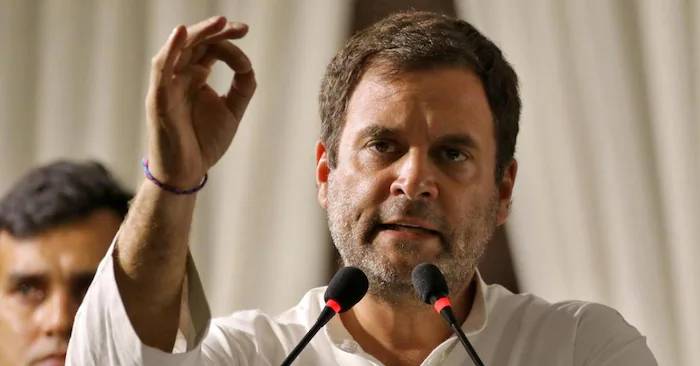
Congress leader Rahul Gandhi has stirred controversy by labeling the BJP as “anti-tribal” ahead of the Jharkhand Assembly elections. During a speech in Ranchi on October 19, he criticized the education system for its inadequate representation of tribal history, stating that only “10-15 lines” are dedicated to tribes. This statement has backfired, giving the BJP an opportunity to attack Congress’s historical oversight of tribal leaders like Birsa Munda and the current President, Droupadi Murmu.
The BJP swiftly countered Gandhi’s remarks, highlighting that the education system he criticizes was established during Congress’s tenure. They emphasized the party’s neglect of significant tribal figures, arguing that Gandhi’s comments inadvertently reflect poorly on his party’s legacy. Babulal Marandi, a BJP leader, pointed out that even under Congress, tribal history was inadequately covered in school curricula, failing to highlight the struggles of tribal communities.


Moreover, the BJP reminded Gandhi of his party’s historical opposition to the formation of Jharkhand, recalling Lalu Prasad Yadav’s infamous statement against its creation. Prominent tribal leader Champai Soren echoed these sentiments, asserting that Congress has not been a true advocate for Jharkhand’s tribal people.
The allegations against Congress, including land grabbing from tribals by its ally, Jharkhand CM Hemant Soren, and financial irregularities in Karnataka involving funds meant for tribal development, further complicate the party’s position. With these issues at the forefront, Gandhi’s comments have not only sparked a renewed critique of Congress’s past but have also exposed contradictions in their current political narrative. As the BJP gears up for the Jharkhand elections, they are likely to leverage this controversy to strengthen their campaign against Congress.