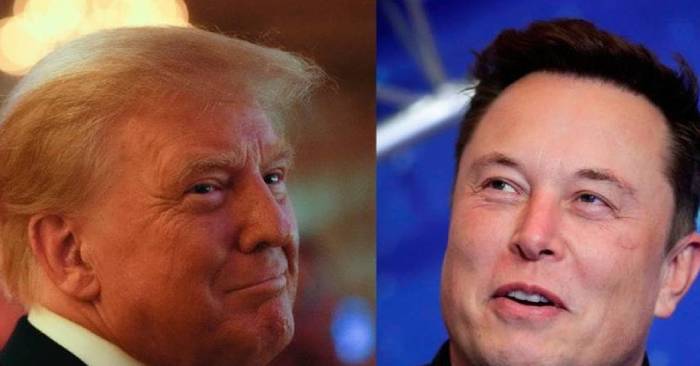
Washington: Former US President Donald Trump has called on Republican lawmakers to block a bipartisan agreement aimed at preventing a federal government shutdown. With a Friday night deadline looming to secure funding for federal agencies, Congressional leaders had proposed a “continuing resolution” (CR) to extend government operations until mid-March.
Trump’s appeal has amplified Republican opposition to the bill, which includes over $100 billion in disaster relief, $30 billion for farmers, restrictions on investments in China, and a modest pay increase for lawmakers — the first since 2009. The deal, which some Republicans see as excessive, has drawn criticism from notable figures, including Elon Musk, who labeled the legislation as wasteful and criticized its additional spending.


Musk, using his platform on X, posted misleading claims about the bill, alleging it contained funding for “bioweapon labs” and a new Washington football stadium. Despite inaccuracies in his statements, his criticism has resonated with many rank-and-file Republicans who typically oppose temporary funding measures for maintaining static spending levels and including “pork” expenditures.
Trump, in a joint statement with Vice President-elect J.D. Vance, insisted on attaching an extension of the federal borrowing limit to the deal, further complicating negotiations. The U.S. federal debt, currently at $36.2 trillion, is set to hit its limit as Republicans take control of Congress in January.
The potential shutdown would affect vital government operations, from border security to national parks. With House Republicans holding a razor-thin majority, Speaker Mike Johnson faces mounting pressure to secure votes while navigating the fallout of Trump’s intervention. Lawmakers must act swiftly to avoid the economic repercussions of a shutdown, as seen during the five-week closure from 2018 to 2019, which cost the U.S. economy $3 billion, according to the Congressional Budget Office.