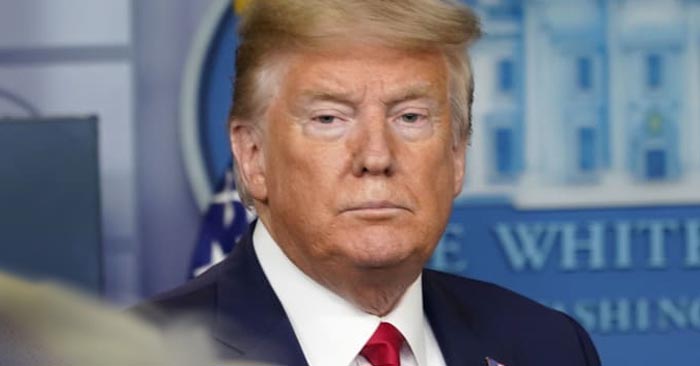
In a significant escalation of military action in the Middle East, U.S. President Donald Trump ordered large-scale airstrikes against Yemen’s Iran-backed Houthi forces on Saturday, March 16, 2025. The attacks were carried out in response to the Houthis’ repeated assaults on commercial shipping in the Red Sea, which have disrupted global trade and increased security concerns. According to initial reports, at least 19 people were killed in the U.S. strikes.
Trump delivered a strong warning to Iran, the primary supporter of the Houthis, stating that if Tehran continued its backing of the group, it would face serious consequences. “America will hold you fully accountable, and we won’t be nice about it!” he declared. The U.S. military action comes amid intensified pressure on Iran over its nuclear program, as Washington seeks to curb Tehran’s regional influence.


Civilian Casualties and Houthi Response
The Houthi-run health ministry in Yemen reported that 13 civilians were killed and nine others injured in the airstrikes targeting the capital, Sanaa. Another six people, including four children and one woman, lost their lives in Saada province, a Houthi stronghold. The Houthis condemned the attacks as a “war crime” and vowed retaliation, declaring, “Our forces are fully prepared to escalate in response.”
Houthis’ Role in the Red Sea Conflict
Over the past two years, the Houthis have launched more than 100 attacks on vessels in the Red Sea, citing their solidarity with Palestinians in Gaza. Their aggressive maritime campaign has sunk two ships, seized another, and caused the deaths of at least four seafarers, forcing major shipping companies to reroute cargo around southern Africa, increasing costs and delays.
While Iran’s other allies—such as Hamas in Gaza and Hezbollah in Lebanon—have suffered setbacks due to Israeli military actions, the Houthis have remained highly active. Trump’s administration, unlike his predecessor Joe Biden’s, has opted for a more aggressive approach, aiming to degrade the Houthis’ military capabilities.
Expanded U.S. Military Operations
Saturday’s airstrikes were carried out by fighter jets launched from the Harry S. Truman aircraft carrier, stationed in the Red Sea. U.S. Defense Secretary Pete Hegseth confirmed that the attacks marked the beginning of a prolonged military campaign aimed at neutralizing the Houthi threat. “Houthi attacks on American ships and troops will not be tolerated. Iran, their benefactor, is on notice,” Hegseth stated.
Trump hinted at further escalation, asserting that “overwhelming lethal force” would be used until the Houthis’ attacks ceased. Iran has yet to respond officially, but the country’s Supreme Leader Ayatollah Ali Khamenei recently rejected Trump’s request for negotiations over its nuclear program.
Rising Regional Tensions and Global Implications
The timing of these airstrikes raises concerns about widening conflict in the region. Iran has increased uranium enrichment to near weapons-grade levels, leading to heightened fears about its nuclear ambitions. While Iran insists that its nuclear program is purely civilian, Western nations argue that such high levels of enrichment are unnecessary unless nuclear weapons are being developed.
As tensions continue to escalate, the situation in Yemen, the Red Sea, and Iran remains volatile, with potential consequences for global security and trade. The U.S. military campaign against the Houthis is expected to last for weeks, marking one of the most significant American military operations in the Middle East in recent years.