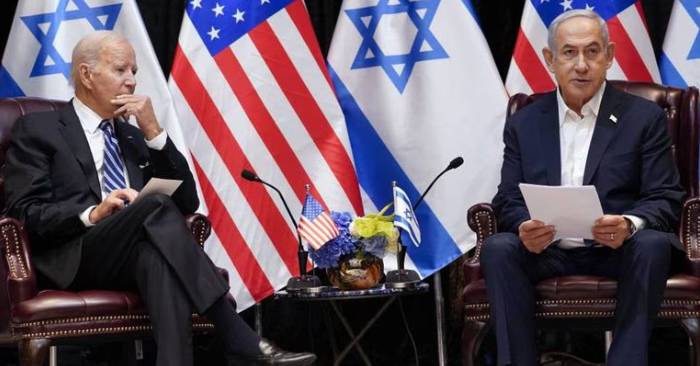
Washington: The Biden administration has issued a strong warning to Israel, urging it to increase humanitarian aid access into Gaza within the next 30 days or risk losing critical U.S. military funding. This ultimatum came in the form of a letter from U.S. Secretary of State Antony Blinken and Defense Secretary Lloyd Austin, highlighting growing concerns over the deteriorating humanitarian situation in Gaza.
The letter stressed the need for Israel to allow at least 350 aid trucks daily into Gaza, alongside implementing humanitarian pauses to ensure the safe distribution of resources. This push comes after recent Israeli airstrikes, including one that hit a hospital site, which has intensified concerns over civilian safety.


U.S. frustration stems from the drop in aid deliveries to Gaza, which have decreased by more than 50%, according to the State Department. Blinken and Austin’s previous intervention in April had initially improved the aid situation, but that progress has since declined. An unnamed Israeli official acknowledged receiving the letter but refrained from commenting publicly on the specifics. The U.S. is pressing Israel to fulfill its international obligations to improve humanitarian conditions in the region.
This development comes at a critical juncture in U.S.-Israel relations. While the Biden administration remains a staunch supporter of Israel, it is facing increasing pressure to address the humanitarian crisis, especially in the run-up to the U.S. presidential election.
Meanwhile, aid organizations have raised concerns about a potential blockade of northern Gaza, which could severely impact civilians trapped in the conflict. With essential supplies dwindling and hospitals running out of resources, the situation is becoming increasingly dire for the people of Gaza.
Since the beginning of the conflict in October 2023, over 42,000 people have lost their lives in Gaza, many of them women and children. Israel’s military response followed the deadly Hamas attack on October 7, which killed 1,200 Israelis. Despite continued U.S. military aid, currently totaling $17.9 billion, the situation on the ground remains grim, with both humanitarian and political tensions escalating.