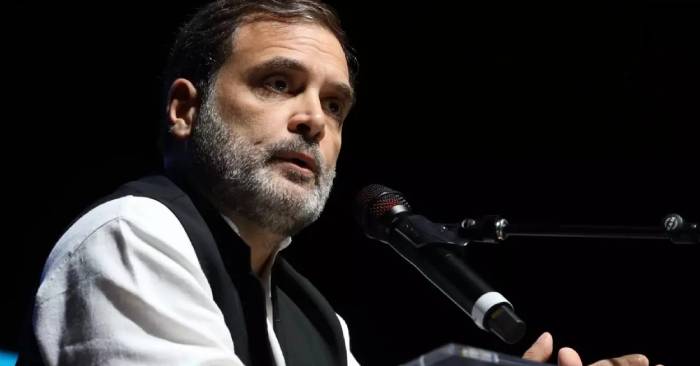
Washington: During his recent visit to Washington, Congress leader Rahul Gandhi acknowledged that his party supports several key foreign policy positions taken by the ruling BJP under Prime Minister Narendra Modi. Gandhi affirmed alignment on issues such as maintaining strong ties with the United States, holding a firm stance against terrorism in Pakistan, addressing concerns over extremism in Bangladesh, and supporting India’s position on Israel.
However, Gandhi drew a sharp distinction when it came to India’s approach toward China. He heavily criticized the Modi government for allowing Chinese forces to occupy Indian territory in Ladakh, comparing the area seized to the size of Delhi. According to Gandhi, this is a significant failure, which no national leader should allow, especially considering the implications for India’s sovereignty.
“We are witnessing a huge increase in China’s power,” Gandhi said, stressing the need for India to develop a long-term strategic vision. He criticized the government’s “tactical” approach, which he feels lacks the foresight necessary to deal with the changing geopolitical landscape. Gandhi underscored India’s democracy as its greatest strength and urged the government to protect its pluralistic values while navigating global challenges.
Gandhi also backed Modi’s policies regarding Pakistan, stating that terrorism remains a barrier to any productive dialogue. On US relations, he expressed bipartisan support and forecasted continued cooperation between the two countries. Gandhi also expressed concern over the ongoing violence in Israel, condemning actions from both sides while reaffirming his stance against violence.
His remarks highlighted the need for India to strike a balance between maintaining its strategic alliances and preserving its democratic values amid global power shifts, especially concerning China.