Mappila cuisine, a distinctive culinary tradition from Kerala’s Malabar region, is renowned for its rich flavors influenced by Arabic culture. This unique cuisine, characterized by aromatic biryanis and delicate desserts, has evolved over centuries, tracing its roots back to the spice trade in the Malabar region as early as 1000 BC. This article delves into the fascinating history and key elements of Mappila cuisine, showcasing how it has become a cherished part of Kerala’s cultural heritage.
Kerala, situated in the southwestern part of India, has long been a melting pot of diverse cultural influences, shaped by centuries of trade, migration, and colonization. Malabar’s history as a hub for spice trade dates back to around 5000 BC when the region engaged in commerce with the Middle East. By the 7th century AD, Islam, introduced by Arab traders, made its way to Lakshadweep and Kerala. The locals warmly welcomed these traders, conferring upon them the title of “Mappila,” which originally meant “great child” and has now come to signify “son-in-law” or “bridegroom.” Among Kerala’s various culinary traditions, Mappila cuisine stands out for its unique and flavorful offerings.

The origins of Mappila cuisine are deeply rooted in Kerala’s long history as a spice trade hub. Arab traders were among the first to establish contact with the region, drawn by Kerala’s exotic spices such as black pepper, cardamom, and cinnamon. The ancient port of Muziris served as a key entry point for these traders, many of whom settled in Kerala, married local women, and formed a distinct Muslim community known as Mappilas. Over time, Mappila cuisine emerged as a fusion of local Kerala ingredients with Arab, Persian, Portuguese, Dutch, and British influences, resulting in a rich, aromatic, and deeply flavorful culinary tradition.
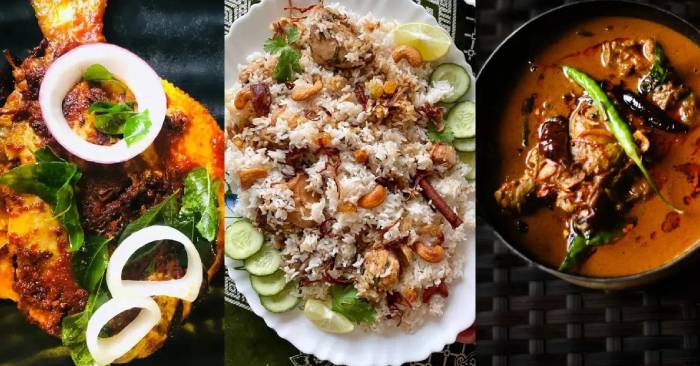
Mappila cuisine is characterized by the generous use of spices, particularly cardamom, cloves, and the unique Tellicherry pepper. Unlike other South Indian cuisines that predominantly use coconut oil, Mappila cuisine often incorporates ghee, reflecting its Arab influences. The use of fennel (saunf) instead of cumin (jeera) gives the dishes a subtle yet aromatic flavor profile. Intricate cooking techniques, such as slow-cooking meat over low heat to infuse intense flavors, are also a hallmark of this cuisine, especially in dishes like biryanis and other meat preparations.
Some iconic dishes of Mappila cuisine include Thalassery Biryani, made with a special short-grain rice called Khaima or Jeerakasala, Muttamala, a delicate dessert made from egg yolks cooked into lace-like strands, Chatti Pathiri, a layered pancake dish filled with spiced meat, and Mutta Surka, a beloved breakfast delicacy made from rice flour and eggs, often enjoyed with spicy chutney.